Showing posts with label Clash of Clans. Show all posts

Saturday, 25 August 2018

Frostpunk Review: Damned If You Do, Damned If You Don't(Self-Sufficient Camp)

Huddled together in a crater, they gather around their last hope against the cold–an aging steam generator. Fueled by coal, it can kick out just enough heat to give the last bastion of humanity a faint glimmer of hope. A moment like this illustrates the essence of Frostpunk, a survival-style city-builder where you must lead a lonely band of survivors not against encroaching armies, but against a frigid storm that’s wiped out most of the human race.
As temperatures plunge well below freezing, it’s your job to guide the remaining populace towards establishing a successful, self-sufficient camp. You’ll need hunters and hothouses, mines and saw mills. And you have to keep all of these machines running in temperatures that would make even the hardiest penguins shiver.
The essentials are pretty simple, though. People need houses and jobs. Because this is a survival situation, everyone works on a near-constant basis. The day starts at 5:00 AM, and people have a few hours to finish any construction projects before they head to their primary job for 12 hours. Then they head back home, finish a fewsmall tasks, and go to bed.
This cycle is hugely important because you’ll need to always make sure you have enough fuel to keep the generator running through the night. A major part of this is planning out when and where people need to be to complete their tasks. If you survive, you’ll build outwards in concentric rings, ensuring that, as you expand, your core can keep up with the heating demands and provide enough warmth for your citizens to combat the pervasive chill.
This all works seamlessly, too. There’s a natural pattern to it all, and you’ll be given little challenges throughout the day to help give you a bit more structure. Often, these are emergent consequences of past decisions. If you were able to keep people alive through the night, but not warm enough, then they could get sick–posing a new set of challenges to prioritize for the day after. If any one element of the city is neglected a bit too long, then you’ll start getting more strident demands from your people, which often become more intricate, two-to-three-day goals. The structure for it all is elegant and precise–you always have just enough work, and you’re never left without near and moderate-term goals to help give you direction.
Your mission is also strained by all manner of unavoidable disasters. Everything from sudden cold snaps and necessary amputations to mining disasters and refugee crises crop up, requiring your intervention. This forms what could be called the crux of the game–balancing hope and discontent. Compassionate actions give your people hope. They remind the huddled masses that we (in the general sense) haven’t lost touch with humanity. Dispassionate or draconian acts, however, drain the collective will. Unlike most moral choices in games, neither are unilaterally better.
Compassionate actions are typically better long-term goals for short-term hits. For instance, taking on gravely injured or terminally ill refugees will help hold your people together–reminding them that if they are ever left out or lost, they will be found and cared for. At the same time, medical care in the post-apocalypse is damned near impossible, and if you don’t have the facilities to care for the people, you’ll soon end up with a pile of bodies spreading disease throughoutthe colony. Manage to fix up the wounded, though, and you’ll have an able-bodied workforce embued with the unbreakable spirit of hope.
These are the kinds of choices Frostpunk lives on, and what separates it from every other comparable game. Frostpunk gets a lot of mileage from it, too. It’s hard to cling to the moral high ground–even if you succeed–when you’re reminded of the sacrifices you’ve made along the way. That gives your decisions weight in a way that SimCity and many of its ilk simply can’t. Here, the effects of disasters are tangible, and the game rightly blames you for your personal failures.
One of your citizens approaches you: “Children should be put to work. We’re all in this together, and we need help right now.” Then, you’re shuffled over to a rough-hewn book of laws for your band. There you can, with a click, start putting the kids to work. Or you could build child shelters to house the kids and keep them healthyand safe from the cold. The citizens didn’t present you with that second option–and why would they, they can only see what’s immediately in front of them?
Frostpunk itself, in the tutorial, notes that the people you serve are always looking for a solution, but not necessarily the best one. What’s ultimately best depends on the emergent challenges you face. Do you have a mysterious illness spreading wildly through the camp? Are you struggling to find coal, forcing you to char firewood and construction materials to keep the generator going? These questions are constant and agonizing throughout. Frostpunk drips cynicism and bleakness. And yet it is that hopelessness, that fundamental need of human beings to persist in spite of everything that Frostpunk seeks to embody most. You become the bulwark against fear–even as you look across the land and internalize just how hard this fight will be.
That’s powerful precisely because it hurts. Every time you make a tough call, doubts linger. If you had been better, if you had chosen differently, maybe you’d have been able to save everyone. Adding to the distress, Frostpunk’s Hope meter shows you the consequences of your decisions right as they happen. Send children into the mines and you can watch the camp’s faith evaporate as a whole chunk of meter gets lopped off.
This system–balancing the will of the people against their own needs–works so well precisely because every mechanism in the game is built to support that core idea. Your job is to manage the emotional fortitude of the people as much as it is about anything else. In time, you’ll be able to form scouting parties, outposts, and build a sprawling network of makeshift towns and settlements that stand together. But again, that arc intersects with countless brutal decisions. Should you send a scout to help survivors fight off bears? What about risk turning off an electrical super-weapon that fries everything it touches–but with the potential of a new safe haven from the world outside? The story of your civilization, of your masses hoping, is forged in the choices you make along the way. And they become a part of the narrative you build.

Frostpunk is among the best overall takes on the survival city builder to date. Its theming and consistency create a powerful narrative through line that binds your actions around the struggle to hold onto humanity in uncertain times. Hope is a qualified good, but you may not always be strong enough (or clever enough) to shelter that flame from the cold.

Friday, 10 August 2018

Jotun: Valhalla Edition Switch Review – A Slight Downgrade(Different Strategies)

Imaginethe bleakness of the man versus giant creatures gameplay of Shadow of the Colossus as a definitively Nordic tale, and you have a general idea of what Jotun is. Sprinkle in a little bit of Dark Souls’ difficulty and a malevolent sense of challenge, and you’re closer to hitting the bullseye. Now imagine all of that hand-drawn in a style somewhere between Dragon’s Lair and Princess Mononoke, and you’ve got Jotun.
Boiling the game down to its disparate parts does the game a mild disservice, though. In execution, Jotun is a perfect storybook, a game that seems ripped from the imagination of a Viking child being told tales of warriors of old facing down their gods. It’s a wonderfully wild, vibrant bedtime story told with fire and verve, even when the game is at its most stark and lonely.
Jotun tells the tale of Thora, a Viking shield maiden who falls from her boat during a voyage and drowns. Because passage to Valhalla is only granted to those who fall in battle, Thora is given the chance to earn her way into the golden halls by finding and killing the Jotun, the Titans of Norse mythology. Along the way, the gods assist her, granting her new power when she finds their shrines and pays her respects. Otherwise, all she has is an iron axe and an iron will. We learn between stages where Thora’s determination comes from in a fantastic, steely narration performed in Icelandic. Each new piece of her story would be worth it on its own, revealing years of underestimation, neglect, and later, a sibling jealousy that turns tragic. Even if the gameplay wasn’t as good as it was, being able to help Thora achieve glory would be more than worth the effort.
Behold, the tree of life.
Gameplay is 16-bit levels of simple, and yes, that is a compliment. You have a light attack with Thora’s axe, a hard-hitting heavy attack with a major delay, and a dodge. Thora can find massive shrines to the Gods in each stage, and by praying there, she earns new magical powers specific to each one–Thor allows her to use Mjolnir for a short time, Frigg allows her to heal at will, Loki creates a decoy that eventually explodes after a time–but all six of the powers have limited uses, and none are what you would call a guaranteed solution to any sticky situation. Primarily, timing, cunning, and luck will get Thora to Valhalla.
For most of the game, that cunning involves mastery of the environment. Jotun’s six stages, which can be tackled in any order, are impeccably designed. They are deceptively linear, laid out in such a way that gives the impression of vast, stunning tableaus in places dwarfed in size by your typical Diablo III dungeon. The illusion works. Grand, breathtaking vistas are the norm in Jotun, and they often serve as a wicked distraction from the dangers mere inches away. They’re also often rather desolate places, dark locales that no mortal has tread upon in ages. The game isn’t swarming with enemies, except for one particular stage that sends a veritable legion of dwarves your way. This bolsters the comparisons to Shadow of the Colossus, where the loneliness of what Thora has to do makes the sheer distance between each new obstacle feel like a greater journey. The real problem with that desolation is that more than a few times, you’ll need to backtrack through some of these areas to find much needed power ups, or because you’ve missed a crucial switch in order to get to said power ups, or because you’ve ended up in an area and the game’s obtuse pause screen map didn’t help you.
And this is why pruning your garden once a week is just so important.
The main events of the game, however, are the Jotun themselves as bosses. The Jotun are simply awe-inspiring enemy design, taking the rather threadbare descriptions from Norse lore, and extrapolating them to the nth degree, with each one several times Thora’s size onscreen.
Thebest is still the first: A nature giant that feels like Ursula from The Little Mermaid made entirely out of living trees and vines. Still, each of the bosses are just wonderfully realized, and you get maybe a good minute to marvel at them before the pain starts. A terrifying shield-swinging giant can summon a legion of dwarves out of the ground to rush at Thora with a scream. Halfway through the frost giant’s fight, the playing field turns into a sheet of slippery ice; when it’s down to a quarter bar of life, a white-out blizzard starts. A blacksmith giant has you fighting in a neverending firestorm. What the Jotun typically lack in speed, they make up for in power, where being in the wrong place at the wrong time during a fight will mean your end in two hits. The Jotuns’ patterns and weak points aren’t hard to suss out whatsoever, it’s simply a matter of using your limited arsenal to deal with them, and often with the horde of peripheral obstacles/enemies each Jotun will throw at you during, and quite often it will still not be enough. The game gives Thora infinite tries, and will start her right at the boss with each of her powers replenished each time she dies. Persistence and learning from the numerous failures will lead to success, but the game will not coddle, and every victory will be well-earned beyond a shadow of a doubt.
The PS4 and Xbox One ports of Jotun are very much on par with the PC version. The only major difference is the addition of Valhalla Mode, a boss rush that opens up after you beat the campaign. Aside from expanded health bars, an extra element of danger has been added to each boss battle taken from the campaign, forcing you to alter your attack strategy. The first stage’s plant boss now has poisonous spores surrounding her weak points, making it a game of hit and run rather than patient strikes. Alternately, a sword-wielding forge boss has a much shorter window in which to strike. Valhalla Mode is a small addition, but a welcome one.
One solemn face and 200 angry dwarves.
The Switch version ofthe game stands tall next to its more powerful console brothers, with not a single frame out of place, and no slowdown, even in the game’s busiest and most expansive areas. In handheld mode, the moments where the camera zooms out to give players a full view of their surroundings, or to behold the game’s numerous, massive bosses can sometimes make poor Thora a tiny red needle in a haystack. These moments are scarce, though, and it’s a small price to pay for the game’s epic scope.
The Switch port does, however, have one problem that’s much less tolerable: A much longer load time stretching between 15-30 seconds when entering a new area or respawning after a death. The initial load for a stage is acceptable, and transitions to new areas within a stage are much quicker, but for a game whose greatest challenges come from trial-and-error bosses that can sometimes kill with a single hit, the wait time to have another crack and be maddening. It’s a single flaw, but it’s a crucial one that can add insult to game’s legion of fatal injuries.
Jotun is a short game, and good players can probably plow through it in about 3 or 4 hours, but even with the ending behind me, I find myself dying to witness some images again and wanting to try different strategies. I want to hear Thora tell her tale again. Any good bedtime story that makes you want to hear it again right after it’s over is one for the ages.


Wednesday, 1 August 2018

Nintendo Labo Review: Variety Kit And Robot Kit-Different Combinations

It’s very easy todismiss Nintendo’s new line of Labo build-and-play toys as merely cardboard. For adults especially, building the Variety Kit’s five toys–or the Robot Kit’s suit–and playing their simple games might feel like a short-lived novelty. But there’s a surprising amount of depth to what you can do with the kit’s stack ofcardboard sheets and cutesy software. It’s a remarkable educational tool and an opportunity to see your creations come to life, and that’s something very special, even if the games themselves don’t stand out.
The Variety Kit comes with five different Toy-Cons to build and then play with: the RC car, the fishing rod, the house, the motorbike, and the piano. In that order, the process of building them gradually increases in difficulty, with the more complicated projects expanding on the concepts introduced in the easier ones. The RC car takes around 10 minutes to build and is effectively a practice run, showing you the importance of precise assembly and how to work with cardboard without bending it in weird places. (The cardboard itself is pretty sturdy if you’re reasonably careful with it.)
After the “make” portion, you move on to “play.” The games are all relatively straightforward; drive the RC car, fish with the fishing rod, play piano using the piano. It’s more rewarding to see how the cardboard translates to the software than it is to play any of the games at length, though they’re deeper than they look at first glance. Even the most basic one, the RC car, has a self-driving function and a multiplayer battle mode; in the motorbike’s game, you can design your own tracks just by moving a Joy-Con through the air. The least interesting, at least from an adult’s perspective, is the house–the game there is to experiment with three insertable parts and see what kinds of rooms and mini-games they can unlock when in different combinations.
The piano is the most impressive component of the Variety Kit, with a regular play mode and a surprisingly deep studio mode. It only has 13 keys, but there’s a lever on the side that changes the octave, giving you access to a wider range of notes. You can layer recordings for more sophisticated songs, change the envelope and reverb of the notes before you record, and insert cards of different shapes into the top of the piano to change the waveform patterns. You can also create drum beats (composed of bass drum, snare, hi-hat, and cymbal sounds) using a kind of punch card that goes in the waveform card slot; the infrared camera in the Joy-Con detects the shape of the card and then uploads the card’s “data” into the studio UI.
Not much of this is apparent when you first start playing the piano, though. A lot of the depth can be found in “discover” mode, where three cheeky characters walk you through the technology behind each Toy-Con, any extra things you can make or do with them, and how the games work. Like with the building process, a lot of the enjoyment comes from learning how each of the Toy-Cons works and understanding why you had to make them a certain way. For kids in particular, there are straightforward explanations of abstract physics concepts that benefit from having the Toy-Cons as hands-on aids. There are also plenty of resources on how to fix the Toy-Cons, including how to repair bent or ripped cardboard (which is good for all ages).
In addition to the VarietyKit, there’s also a separate Robot Kit available. Instead of five different Toy-Cons, you build one large one: a robot “suit.” The basic suit consists of a visor and a backpack with pulley mechanisms for each of your hands and feet that control the in-game robot. The visor part utilizes the left Joy-Con’sgyroscope, while the backpack works using the right Joy-Con’s infrared camera and reflective tape. It’s a complex project that can take three or four hours to build, but the instructions are as easy to follow as they are in the Variety Kit, and it’s broken up into eight steps so you can pace yourself.
The Robot Kit’s games are especially geared toward children’s imaginative play. The main attraction is a destroy-the-city mode, in which you punch buildings to dust and rack up points. In addition to that, there’s a versus mode where two robots can battle and a “studio” mode where you can assign different sounds to the robot’s limbs and step and punch your way to a beat. You can also customize your in-game robot and unlock better abilities in a challenge mode. These games do show the different applications of the Toy-Con you’ve built, but they’re not likely to grab you for very long unless pretending to be a robot is your jam. Like in the Variety Kit, the Robot Kit’s discover mode is the place to learn more.
In both the Varietyand Robot Kits, the secret endgame is the Toy-Con Garage, a mode where you can program your own games using if-then statements. You can pick an input, like “if the Joy-Con is face-up,” and connect it to an output, like “vibrate,” by dragging a line between them on the touchscreen. Depending on how many rules you weave into your program, you can make some decently complex games as well as mod the Toy-Cons you already made. It’s both a great learning tool at its most basic level and an opportunity to challenge yourself and apply everything you’ve learned so far.
It’s nice to have something to tinker with long after building the Toy-Cons, and that’s mainly because the official games are more like demos to show you how everything works. The only one likely to keep your attention for any length of time is the piano; everything else is a jumping off point, and you’re limited by how much it inspires you to create. And that’s just what Labo is at the moment: a great tool for creation, rather than for playing.


Sunday, 22 July 2018

Battletech Review – Slow And Steady Board Game

Enjoying Battletech takes time and patience. Born from the decades-old tabletop game of the same name (which also gave birth to the Mechwarrior series of games), the Harebrained Schemes version of Battletech places the universe into the genre most suitable to its origin: turn-based tactical strategy. It’s a successful endeavor in that playing Battletech very much feels like playing a complex board game, both for better and worse. There are deep systems to be found in its meaningful mech customization, detailed combat scenarios, and enjoyable fantasy of running an interplanetary mercenary outfit. But reaching the point of thoroughly enjoying Battletech requires the willingness to weather its steep learning curve and laborious pace, which can sometimes veer into excruciating territory.
Individual missions in Battletech are protracted, plodding conflicts, averaging around 45 minutes in length. You command a group of four battlemechs, each piloted by unique and specialized pilots, with the goal of either blowing something up or keeping something safe against outnumbering forces composed of hostile mechs and vehicles of warfare. The enormous mechs of this universe are the lumbering, industrial behemoth kind, bulky tanks with legs characterized by ugly chassis and weapons overtly fused to their limbs. They are graceless, unwieldy machines, and Battletech doesn’t hesitate in belaboring their nature as they slowly trudge through the game’s vast, sprawling maps like pieces on a military sand table.
Observing a unit’s actions play out can be a quite a process. You’ll watch them steadily stomp to a point on the topological grid-based terrain, leisurely rotate their torsos to their designated angle, wait for their weapons to spin up, watch the weapons fire, and wait again for a few moments as the damage report comes in to assess the aftermath. Mech animation speed aside, there are often pauses during this string of actions that feel unnecessarily egregious, and given the number of turns that need to be played out, long missions have the capacity to feel never-ending. There are more exasperating examples, too–during escort missions you’ll find yourself watching up to four autonomous convoy vehicles taking turns to crawl through the map, slowly and one at a time, and the display is nothing short of agonizing. At the time of writing, there is a debug mode you can use to help artificially alter speed, but these are not officially endorsed options. By default, Battletech debilitating pace, combined with the game’s lacking tutorials, firm difficulty, complicated UI, and persistent technical stammers mean the experience of Battletech’s early hours can be tough to brave.
But it’s worth it. Growing acclimated to Battletech’s attrition-focused warfare and making enough of your own critical mistakes to get a handle on its systems feels liberating, when it eventually happens. Being able to parse initially obtuse information allows you to internalize and appreciate the suite of mechanical nuances and helps you recognize the game’s detailed and hard-nosed approach to strategy. Like any great tactical game, each decision requires multi-faceted risk analysis for the best possible outcome. But the joy of good choices in Battletech doesn’t come from bombastic maneuvers where your team precisely eliminates a whole enemy squad without a scratch, as it might in XCOM or Into the Breach–that’s an impossible scenario here. Being truly successful in Battletech relies on being prepared to get into scrappy, aggressive fighting, and coming to terms with what an acceptable loss might be to you at the time, whether that’s an objective, a limb, or the lives of multiple pilots.
With only four mechs to eliminate a larger number of adversaries in a turn-based ruleset, with no allowances for mid-combat repair, learning how to maneuver your mechs in order to endure a reasonable amount of damage becomes one of the most gripping aspects of decision making–how far do you push yourself to take on enormous odds? On the battlefield, this might mean something as simple as studying the impressively varied terrain in each map and finding the most advantageous spot to hunker down, or using buildings, forests, and mountains as cover during an advance. But on a more advanced and necessarily specific level, it might mean rotating your mech to present a fully-armored side to an attacking foe and obscure a side already damaged. Taking additional damage to a body part stripped of armor can result in structural damage or loss of limb, requiring replacement and repairs at significant cost, on top of running an increasedrisk of having your mech pilot permanently killed.
Similar considerations are always on your mind when you’re on the offensive. You might decide to temporarily switch off some of your weapons when attacking to avoid overheating your mech, which can cause immediate, all-over internal damage. One of your mechs might be out of ammo but has the option of using its jets to leap off a mountain and crash onto an enemy below to knock it down–but can you afford the risk of breaking both your legs and being floored yourself?
With a complete understanding of how each unit can affect another at different locations, with various skills, weapons, and modifiers at play, your perception of unfolding battles becomes one of utter fascination at the minor details and outcomes of each strike. Seeing the battlefield in a different way in order to devise your own alternative approaches and formulating creative backup plans are things that begin to occupy your thoughts, instead of the tempo. Conflicts are still lengthy, and some drawn-out maneuvers still feel unnecessary, but with the time devoted to each turn, you start to use it to observe and internalize what exactly is happening and why. Pivotal turning points in a battle can be narrowed down to the exact action, which can become tactical learnings for future use. There are still a few random elements that can occur, attributed to the probabilities that drive attack calculations–lucky headshots that instantly injure your pilot regardless of armor durability are the prime unfair example–but regardless, the increased focus and time spent on each distinct action means that the anxious feelings that come with even the most trivial of anticipated hits and misses are amplified tenfold.
Battletech also gives you an interesting ability used to preserve your squad–when a mission becomes overwhelming and dead pilots are almost certain, you can choose to immediately withdraw from a mission, at the cost of sullying your reputation with the factions that hired you and surrendering your paycheck. The latter is an especially vital consideration, because money quickly becomes a huge concern in Battletech’s campaign and begins to affect all your decisions, both on and off the battlefield.
The dynamic between the tactical battles and logistical management means almost every decision you make feels like it has rippling, tangible consequences elsewhere. The campaign sees your custom character rise to the leadership of a mercenary company which has accrued an enormous debt, with monthly repayments to meet every month. Naturally, everything costs money, from post-mission repairs, mech upkeep, pilot salaries, ship upgrades and even travel costs–this is a game about business management as much as it is about commanding a squad. Accepting missions allows you to negotiate a contract to determine what your fee should be in relation to your post-battle salvage rights (valuable for maintaining and upgrading your mech configurations as well as unlocking new models) and faction reputation, which opens up more lucrative opportunities. Request too little money on a mission you take carelessly, and the cost of mission-ready repairs afterward might send you into bankruptcy. Without enough salvage and spare cash to play around with, you’re impeded in your ability to play with one of the most vital and enjoyable parts of Battletech: building and customizing individual mechs to improve the combat capabilities of your squad.
There are close to 40 different models of stock mechs, varying in tonnage and intended purposes. But the joy of spending time in the mech bay is experimenting with differentconfigurations using the parts you have on hand. Every alteration you make on a mech is at the sacrifice of something else–you can carry more weapons and ammo at the expense of dropping things like heatsinks and additional armor plating, for example. Taking the time to fine-tune that balance and seeing your decisions translate into a more efficient unit on the battlefield feels exceptionally worthwhile.
The lore and epic narratives of the Battletech universe are as important as the mechs themselves, and this game puts a heavy emphasis on them. The main plot begins with the coup of the head of a parliamentary monarchy–your custom character’s childhood friend–and continues as you regroup years later to rally forces and take back the throne. The recorded details of the fictional history and politics between factions are unsurprisingly scrupulous–glossary tooltips for universe-specific concepts litter the game’s text. But there are enough broad strokes and familiar feudal parallels to enjoy it at face value, and the comprehensive presentation–well-written and diverse characters, beautiful 2D cutscenes, inspired soundtrack, crunchy sound design and convincing radio chatter–do more than enough to completely sell this brand of mecha fantasy.
Battletech is a game that selfishly takes its time to be meticulous in every respect, and pushing through the density and idiosyncrasies of its many, slow-moving parts can be tough. But if you have the will to decipher it, albeit, at a deliberate andpunishingly plodding pace, you can find yourself completely engrossed in its kinetic clashes. Battletech’s intricate components ultimately foster a fascinating wealth of nuanced systems that build a uniquely strenuous, detailed, and thoroughly rewarding tactical strategy game.


Thursday, 5 July 2018

‘Monster Hunter: World’ review-Large Levels

In2018, Capcom wants you to start paying more attention to Monster Hunter. The action-RPG franchise is widely beloved in Japan, and has, for a long time, found a cult following in the west. From its debut in 2004 on home consoles to its strong presence on Nintendo handhelds in recent years, Monster Hunter found a niche western audience among those appreciate its deep crafting and distinct, repetitive gameplay — Gathering and crafting resources and stalking monsters across large levels, building anticipation for a long, drawn-out battles. The newest entry in the series, Monster Hunter: World, brings the game to PlayStation 4 and Xbox One for the first time (and PC later this year), bringing the series to a bigger stage and a garnering attention from a new audience (at least in North America).
World is not as much of a sea change as outside observers might have expected, but definitely feels like a step forward. The series’ consummate depth remains, but streamlines some of its outdated action-RPG mechanics, thanks to the advantages conferred by more powerful hardware. Monster Hunter: World is the most approachable entry in the franchise, by far, and is easier to play.
By mitigating some of the grind, introducing meaningful mechanical changes, and convincing new players to stick around by getting straight into some epic battles, Monster Hunter: World emphasizes the series’ its biggest strength — the colossal showdowns.

Commence the hunt

Like its predecessors, the story in Monster Hunter: World revolves around a group of researchers and hunters striving to learn more about the giant monsters who thrive in untouched parts of the world. As a hunter in the Fifth Order of the Commission, you travel to the “New World” to help uncover the reason behind the migration of the Elder Dragons — the largest beasts known to man.
Monster Hunter: World tightens the series’ traditional gameplay loop, tightening your focus on a string of tough-as-nails boss fights. Where past games often forced players into fetch quests and other not-so-exciting errands early on, Monster Hunter: World tasks you to slay a Great Jagras — basically a massive Iguana — in your very first mission. These large-scale battles continue, largely unabated, throughout the game’s 30-40 hour campaign. World removes much of the bloat between missions, letting you embark on massive hunt after massive hunt, with little filler in between.
The basic progression of the hunt, however hasn’t changed at all. You get 50 minutes to track your prey, following footprints, drool, monster carvings, and other clues, then either slay or capture the target. These hulking creatures range from dinosaur-esque beasts to fire breathing dragons to otherwise indescribable monstrosities, each with its own set of attacks and weak points. You must heed caution when engaging these powerful targets. Their devastating attacks can send you to your grave in not time if you go in without a plan.
‘World’ carries the series’ tradition of massive boss fights, but removes the knots, letting you embark on massive hunt after massive hunt, with little filler in between.
Monster Hunter did “Soulslike” style combat before Dark Souls. Armed with one of 14 weapons — each of which demands a unique play style — you need to attack at opportune moments regardless of whether you favor light or heavy weapons. World favors deliberate slashes over button mashing, and the methodical pace of your strikes makes the moment-to-moment experience very tense, and every action consequential. You have a greater sense of control of your weapons than in previous entries thanks to more fluid animations, which eliminate much of the clunkiness that comes with animation priority based combat systems, where your character is locked into each action until he or she completes it.
The game is “Monster Hunter,” though, not “monster fighter” — Each match is a prolonged affair. Your target won’t always wait around to get beaten — Weakened monsters will scamper away several times throughout a fight, forcing you to track them down again. In the past, this process had the potential to grow tedious, but thanks to its larger, more ecologically diverse maps, this aspect of showdowns feels more valuable.
Each monster has a resting place and circles around several specific hangouts. The terrain and your surroundings come into play throughout the fight, demanding you take a different approach depending on your current locale. You can use the environment around you to your advantage, and even lure monsters into fighting each other, alleviating some of the burden from yourself.
The daunting scale of these fights creates an actual hunting experience where you actually feel as if you’re at war with a monster that should, based on size and strength, overwhelm you. Fights can last upwards of the entire time limit, but when your foe has fallen, it brings a much greater sense of accomplishment than your average action game.
Considering its challenging difficulty, Capcom has thankfully intertwined the single and multiplayer components into one experience. Each and every mission, for the first time, can be completed alone, or with a party of up to four players. If a mission goes sideways on a solo run, you can even send out an SOS to call for help from other hunters online. While designed around an always-online system, the game can be played solo offline.
World still has a steep learning curve, mainly because of the grueling length of the fights. The game initiates new players by throwing them into the thick of battle early, teaching them how to recognize patterns, conceive strategies, and then abandon them, for every monster they meet. New players will struggle, but if you’re willing to experiment, you will find your footing as you plow through the first few fights.

Something, Something… Research… New World… Something, Something

World’s more combat-forward structure does come with some strings attached. There’s a relatively fleshed-out story built around World’s campaign. While that story lends the game the look and feel of a AAA console game, it is not especially compelling unto itself.
The narrative plays out over a series of cinematics between missions, as well as through still images with unvoiced dialogue. It’s awkward, to be sure, especially since some of the story’s most pivotal moments don’t earn the proper, animated treatment they deserve. Then again, the cutscenes feature corny voice acting that doesn’t always line up with the text and rigid animations, so it may not be much of a loss.
To be fair, better cutscenes would not be enough to prop up Monster Hunter: World’s narrative. Sadly, your created character acts as an empty, nodding vessel. He or she becomes the hero of the story, but had no backstory or discerning personality. The notability of the Fifth Order remains unexplained throughout, but you wind up as the last hope. Not to mention your “Handler,” an enthusiastic young woman, believes in your abilities so unfailingly, yet the trust between the pair is never established nor earned.
For fans, at least, a poorly crafted story won’t detract from the thrill of the hunt. Monster Hunter has always been about the boss battles, and that remains true in World. The bottom line is, however, that there’s nothing wrong with tapping furiously to speed through dialogue and get back into action.

Conventional is sometimes good

While Monster Hunter’s general vibe remains, some common-sense mechanical changes make World more accessible. Most notably, and bafflingly, the switch to a home console, and a controller with dual analog sticks, means you can control the game’s camera for the first time in the series.
The drawn out, epic scale of the fights makes you feel at war with a monster that should, based on size and strength, overwhelm you.
In previous Monster Hunters, the camera was either fixed, or had a mind of their own, leading to awkward perspectives and frustrating deaths. In combat, having control of the camera completely changes the way you use some weapons. Projectile weapons, like bow and arrow and bowguns, no longer feel needlessly cumbersome. In fact, projectiles became our weapon of choice thanks to the camera fixes. It’s huge quality of life improvement that will feel like a breath of fresh air of veteran players and removes one of the series biggest longstanding barriers to entry series for new players.
There are also a litany of smaller design tweaks further strengthen World’s accessibility. You can now eat at camp mid-mission to gain stat boosts, as well as change gear. Each map has numerous camps, which serve as fast travel points to ensure you can move around the map quickly. The map tracks all of your resource discoveries to ensure that you won’t forget where you found useful goods. You’ll also actively see how much damage each attack deals, clueing you in on spots where you should aim your blows. Modern games in the genre have included some of these conveniences for years, so it’s nice to see Monster Hunter get with the times.

The hunt never ends

As always, Monster Hunter keeps on giving long after you finish the main objectives. World brims with content. Endgame objectives with gradually increasing difficulty keep opening up after the story credits roll, acting as a sort of second main course.
And for those who want to savor the campaign before getting to the real challenging stuff, there’s plenty to distract you from the core campaign.
An abundance of side quests ranging from standard slaying or capture missions to scavenger hunts offer different challenges. World adds two new forms of mission, “Investigations” and “Bounties.” Unlocked gradually throughout the game, Investigations are limited-use activities that dole out bonus rewards based on difficulty. By the time you play through the campaign, you will have unlocked dozens of these, while Bounties act as secondary goals to finish while working towards a mission’s main task.
These sidequests are optional, and they feel like it: They frequently revolve around a remix of already completed missions, and are really meant for players who have completed most of the game’s other content and want to prep for World’s toughest endgame hunts.
Since launch, Capcom has also started adding new hunts, seasonal events and other post-launch content. The first free update, released in late March, added the monster “Deviljho” to the game as well as his specialized weapons and tools. A second update added the monster “Kulve Taroth,” and a new area, the Caverns of El Dorado.
Special limited-time seasonal events have also come to the game since release, such as the Spring Blossom Fest in April, which added some new floral items and gear to give players spring fever. The event also includes exclusive quests, which may give even lapsed players a new reason to pop back into the game.
Monster Hunter: World Compared To
Acquiring and leveling up all of Monster Hunter’s best weapons and gear could easily take hundreds of hours. So while the lengthy campaign will surely be enough for some players, those who relish in the grind will have more than enough to do to keep them busy for a long, long time.

Our Take

Monster Hunter: World feels like the best of both worlds. It manages to be accessible to new players without compromising the deep mechanics that drew fans to it in the first place.
Even if it doesn’t always look cutting edge, World takes advantage of the PlayStation 4 and Xbox One hardware both in terms of its larger areas and in streamlining and refining its action RPG systems for the better. World features a nearly endless loop of hunting and grinding. Even though the story falls flat,Monster Hunter: World surpasses its predecessors by a mile.
Is there a better alternative?
No, the Monster Hunter series is a one-of-a-kind action RPG and Monster Hunter: World outclasses each entry that came before it. For those who want a deeper story with similar gameplay, Bloodborne may be a better option.
How long will it last?
The campaign took us roughly 40 hours, including a few optional quests and Investigations. With endgame missions aplenty, World, like other entries in the series, features at least a hundred hours of differentiated content, and much more for those who fall in love with it.
Should you buy it?
Yes. If you like action RPGs and aren’t afraid of a challenge, Monster Hunter: World stands out and you should definitely give it a try.


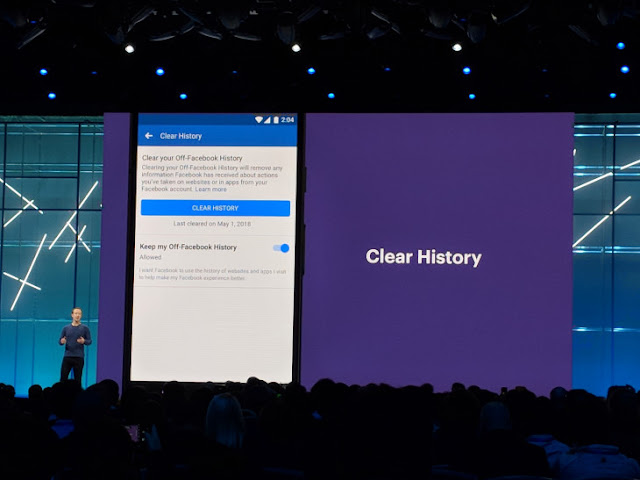
Facebook announces way to “Clear History” of apps and sites you’ve clicked-Analytics to developers

Today is a big day for Facebook   . The company is hosting its F8 developer conference in San Jose today and just before the event is sch...